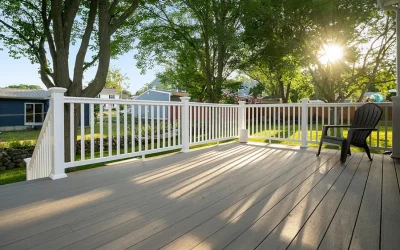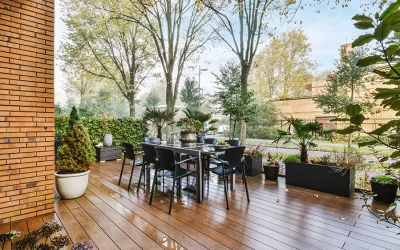
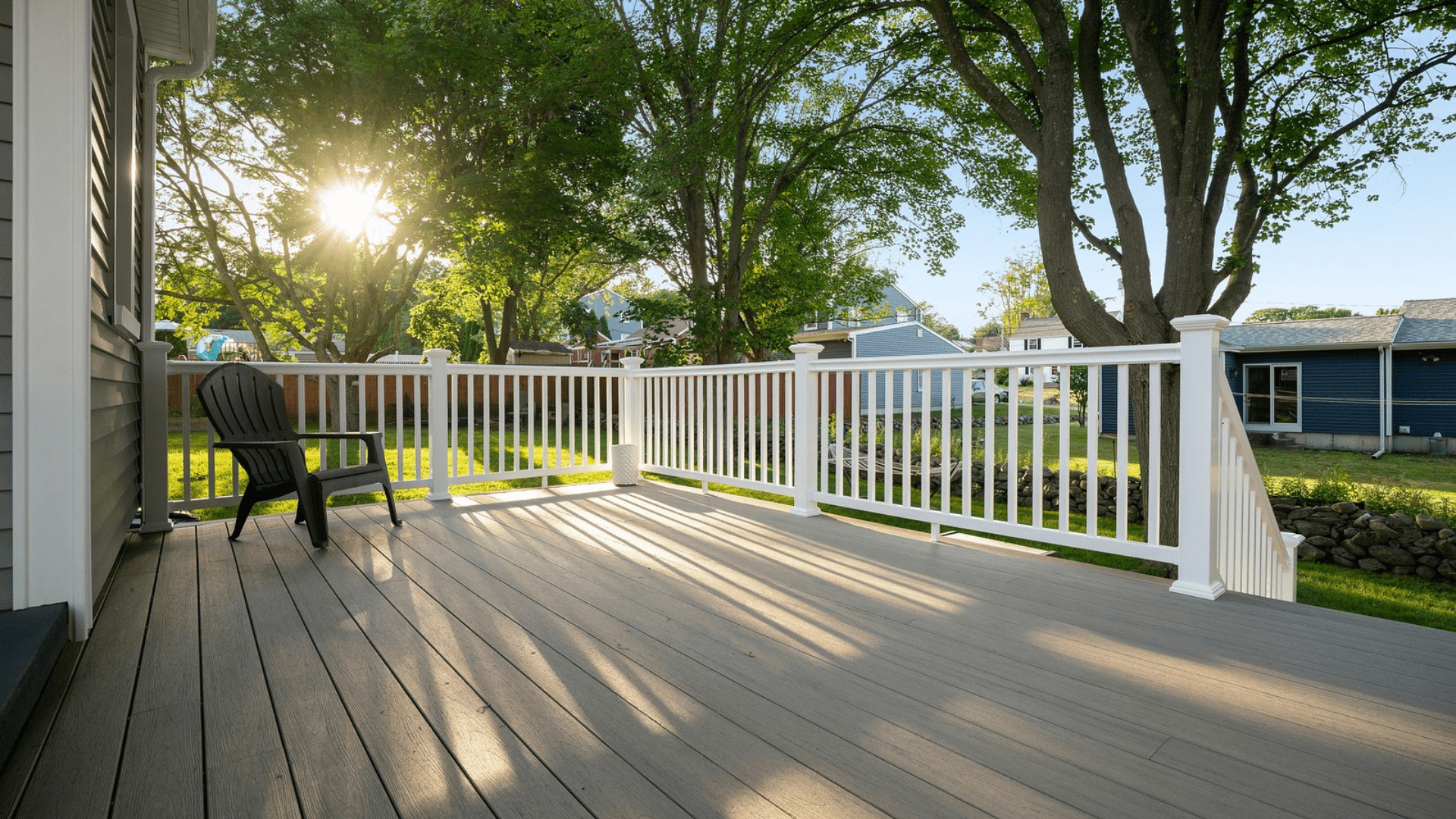
Composite decking is a smart investment if you want a deck that lasts and doesn’t demand constant upkeep. It’s built to go the distance, often 25 years or more. Still, it’s not without its challenges. You’ll pay more at the start, and on hot days, the boards can heat up. Like anything built to last, it needs to be installed right and cleaned now and then to keep mold and shifting at bay.
So the real question isn’t just whether composite is better. It’s about whether composite is the right fit for your home and your priorities.
Why This Question Matters
Most homeowners start with the same question. You get tired of sanding and staining your wood deck year after year. Boards splinter, nails work loose, and rot sets in. Instead of relaxing, you end up with another project on your hands. Composite decking offers a simpler way forward. It’s built to last, needs less maintenance, and stands up to rot and insects. But it does come with a higher upfront cost. That leaves many homeowners asking themselves:
Am I paying for real durability? Or just convenience?
The truth is, you get a bit of both.
Composite vs. Wood: The Real Cost Comparison
At first glance, wood looks far cheaper. But that price comparison only reflects the day the deck is built, not the years that follow.
Here’s how the materials typically compare over time.
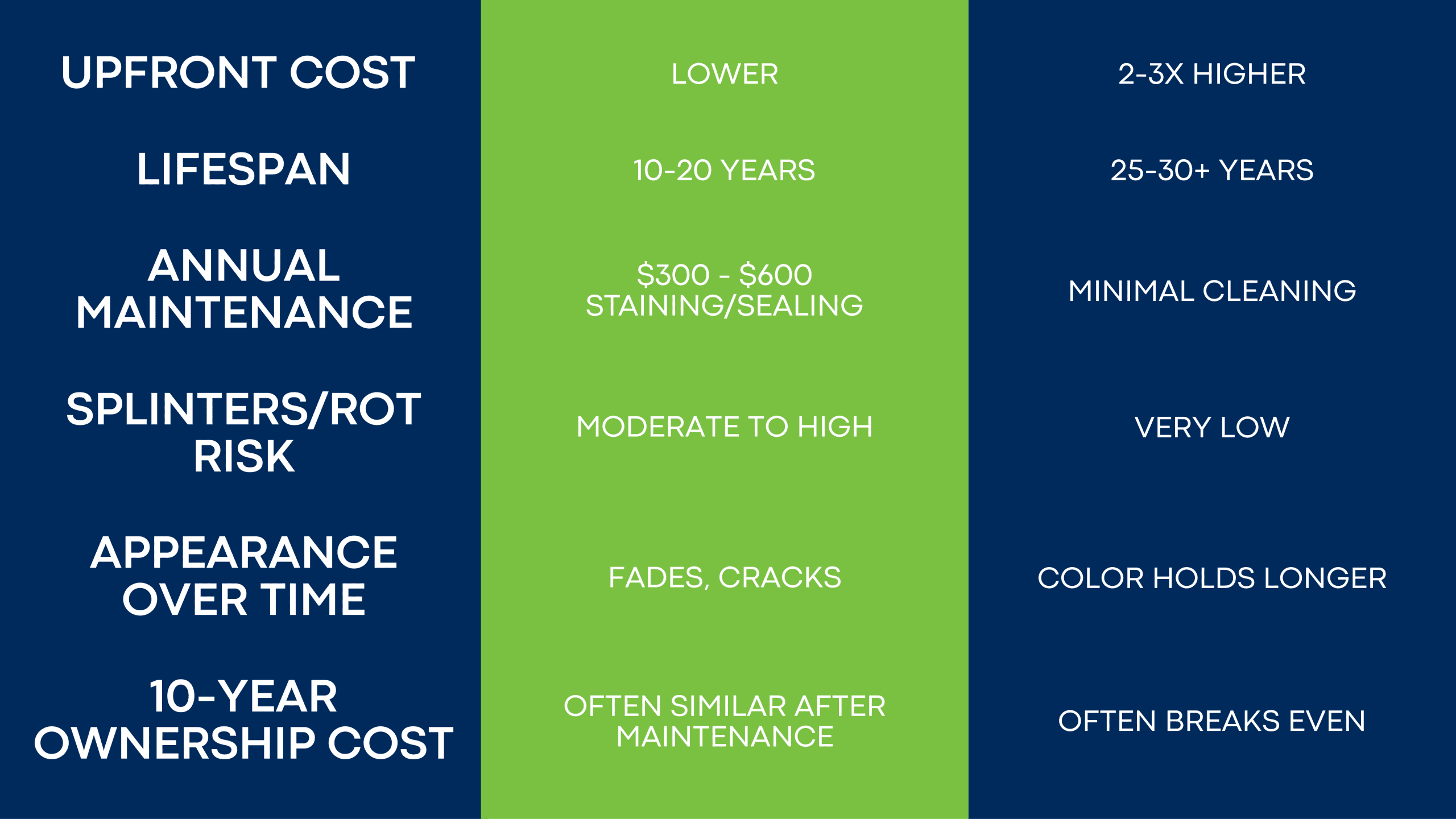
If you plan to stay in your home for years to come, the higher upfront cost of composite often pays off through less maintenance and a longer-lasting deck. But cost isn’t the only thing that matters.
The Hidden Tradeoffs Most Sales Pitches Skip
Composite decking takes care of many of the headaches that come with wood, but it brings its own set of things to think about. Knowing these tradeoffs helps you choose what’s best for your home.
Heat in Direct Sun: Composite boards tend to retain more heat than traditional wood when exposed to full sunlight. On very hot days, darker boards can become uncomfortable for bare feet. Many newer products use lighter colors or special coatings to help, but where you place your deck, how much shade it gets, and airflow all make a difference.
Moisture and Mold: Composite boards are built to resist moisture, but mildew can still show up. In shady areas where leaves and debris accumulate, moisture can sit on the surface and allow mold to form. Routine cleaning helps prevent this, but the deck is not entirely maintenance-free.
Expansion and Contraction: Composite boards expand and contract more with temperature swings than wood does. Getting the spacing right during installation is key. If boards are installed too close together, they can warp or move as the weather changes. This isn’t a problem with the material itself. It usually comes down to how the deck was installed.
Quality Differences: Not all composite decking performs the same. Lower-quality boards may fade, swell, or warp faster than higher-end capped composites. Choosing the right product is one of the biggest factors in making sure your deck lasts for decades.
What Composite Decking Does Exceptionally Well
Even with those tradeoffs, composite decking takes care of many of the biggest headaches that come with wood decks. Composite decks are known for:
Low maintenance – no yearly staining or sealing
Durability – resistant to rot, insects, and splintering
Consistent appearance – color and texture hold up over time
Safety for families and pets – smooth surfaces without exposed nails
Long lifespan – many systems last 25 years or more
If you want an outdoor space you can enjoy without the constant upkeep, composite’s benefits are often worth it.
When Composite Decking Makes the Most Sense
Composite is usually the better choice when:
- You plan to stay in your home long-term
- You want minimal maintenance
- Your deck sees heavy family or pet use
- You live in a humid or moisture-prone climate
- You prefer consistent color and appearance
In these situations, the reduced upkeep and longer lifespan usually justify the higher upfront cost.
When Wood Might Still Be the Better Choice
Composite isn’t always the right answer for everyone. Traditional wood may make more sense if:
- You’re working with a tight upfront budget
- You enjoy maintaining natural wood finishes
- The deck is small or temporary
- You prefer the natural look and feel of real lumber
Wood decks can perform well when properly maintained, they simply require more ongoing care.
Common Questions Homeowners Ask
Does composite decking really last longer than wood?
Yes. Most composite decks last 25 years or more, while pressure-treated wood decks often need significant repairs or replacement within 10–20 years.
Does composite decking get too hot?
Composite can become warm in direct sun, especially darker colors. Lighter shades, shade structures, and good airflow help keep temperatures comfortable.
Does composite decking mold?
Composite resists rot but can still develop surface mildew in damp or shaded areas. Occasional cleaning prevents this from becoming a problem.
Is composite decking stronger than wood?
Composite is engineered for durability and resists rot, insects, and splintering. It performs very well structurally when installed according to manufacturer guidelines.
Is composite decking worth the cost?
For many homeowners, yes. Particularly if you plan to stay in your home longer than five years and want a deck that requires very little maintenance.
The Bigger Decision Most Homeowners Are Really Making
When you choose between wood and composite decking, you’re deciding on more than just a material. You’re choosing how you want to spend your weekends for years to come.
Wood decks often cost less upfront but require consistent maintenance. Composite decks cost more initially but eliminate most of that upkeep. For many homeowners, that tradeoff makes the choice clear. The best deck isn’t just the one that looks good on day one. It’s the one you’re glad you chose years down the road.