Repairing a roof is often the smart financial move. But once repair costs start approaching 30–50% of the price of a new roof, it’s usually time to reconsider whether repairs still make sense. At that point, fixing problems again and again can end up costing more than simply replacing the roof.
The real challenge is knowing when you’ve reached that turning point.
Why This Decision Feels So Stressful
One of the most common questions homeowners ask after a roof inspection is simple:
“Can this be repaired, or do I really need a new roof?”
It’s a fair question. A full roof replacement is a big investment, and most homeowners want to know if a smaller repair can buy them more time. Sometimes it absolutely can. But sometimes repairs turn into what contractors call chasing leaks. Fixing one spot just leads to the next problem in an aging roof.
Understanding the numbers behind your options can make the decision much clearer.
The Cost-Per-Year Math Most Homeowners Never See
Most roofing conversations focus on today’s price. But what really matters is what you’ll spend over time.
Here’s a simplified example.
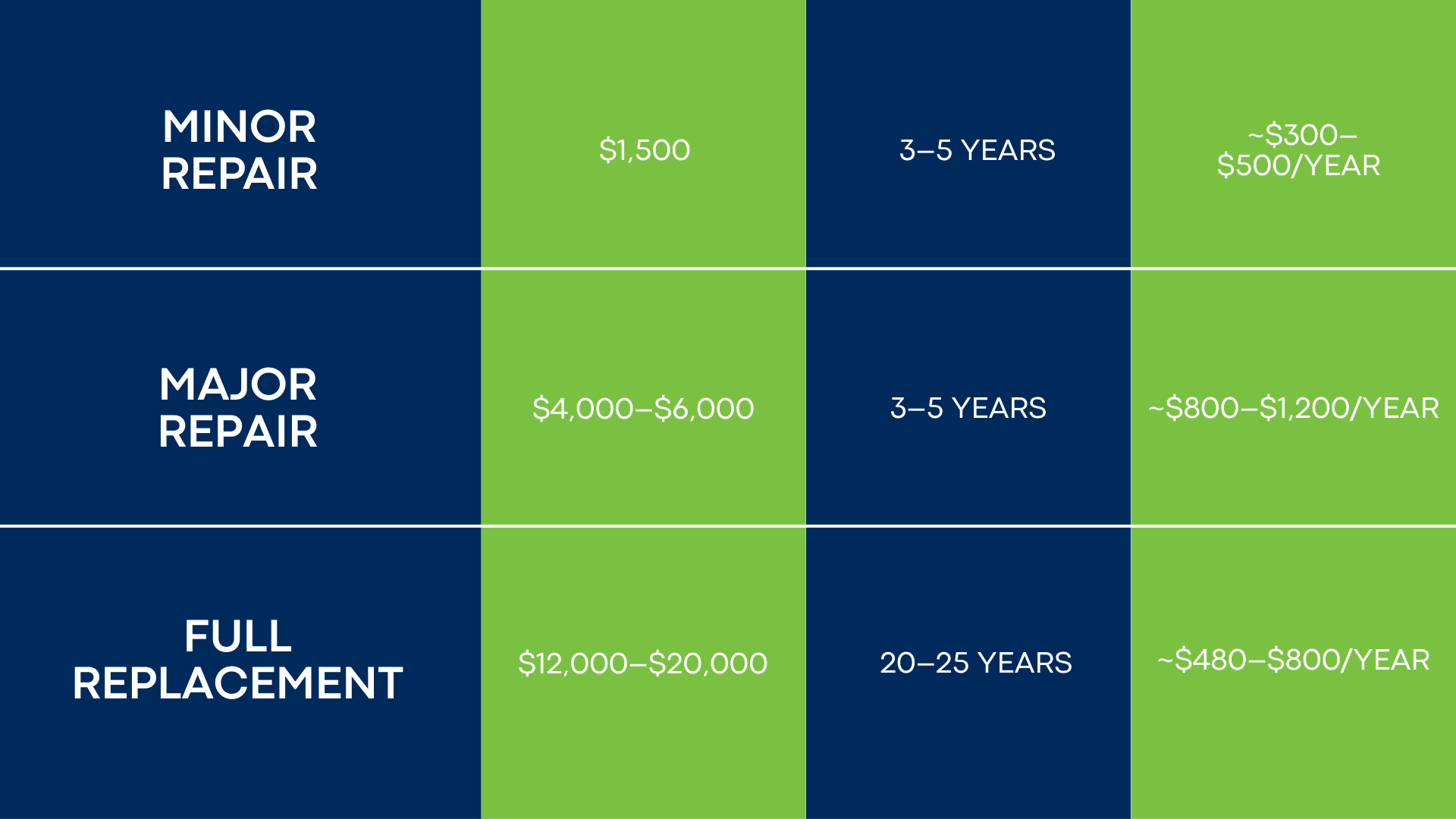
In many cases, big repairs end up costing more each year than a full replacement, even if the upfront price is lower. That’s why this decision isn’t just about today’s bill. It’s about how long your roof will actually last.
The “Repair Threshold” Contractors Don’t Always Explain
A practical rule many roofing professionals use internally is this:
If repairs begin approaching 30–50% of the cost of replacement, replacement often becomes the more logical financial move.
Here’s why. When a roof needs major repairs, it’s usually not just one spot that’s worn out. The whole system is getting older. Fixing one area might stop a leak for now, but it doesn’t turn back the clock on the rest of the roof. That’s how homeowners sometimes spend:
- $2,000 fixing one leak
- $2,500 repairing flashing two years later
- $3,000 replacing storm-damaged shingles
And after all that, you still end up needing a new roof. By then, you may have already spent half the cost of a full replacement without solving the real problem.
Age Is Often the Biggest Clue
How old your roof is makes a big difference in whether repairs are worth it. Younger roofs usually respond well to repairs because the rest of the system still has plenty of life left. Older roofs are a different story. If shingles are losing granules, curling, or cracking, the whole surface may be reaching the end of its life.
As a general guideline:
- Under 10 years old: Repairs usually make sense
- 10–20 years old: Depends on damage and condition
- 20+ years old: Replacement often becomes more economical
Age isn’t the only factor, but it plays a big role in the decision.
Damage Size Changes the Equation
How much damage there is matters just as much as how old the roof is. Small, isolated issues are often repairable, such as:
- A few shingles lifted by wind
- Flashing failure around a vent or chimney
- Localized storm damage
But if damage spreads across large areas, repairs become less reliable. At that point, repairs are more like temporary patches than real solutions.
Repairs Don’t Reset the Roof System
There’s another factor many people overlook: what a replacement really does for your home. A roof replacement isn’t just new shingles. It typically resets the entire roofing system:
- Underlayment
- Flashing
- Ventilation components
- Seal points
- Water barriers
This often means better durability and sometimes even better energy performance. Repairs fix the symptoms. Replacement gives your roof a fresh start.
Choose Repair If…
Repair is usually the smarter financial move when:
- The roof is relatively young (under 10–15 years)
- Damage is limited to a small area
- Shingles still have strong granule coverage
- There are no structural concerns beneath the surface
- You plan to sell the home soon and only need short-term reliability
In these cases, a repair can often add several good years to your roof.
Choose Replacement If…
Replacement often makes more sense when:
- The roof is approaching the end of its lifespan
- Multiple areas are showing wear or leaks
- Repairs are approaching half the cost of replacement
- Shingles show widespread granule loss or curling
- Previous repairs have already been attempted multiple times
At that point, more repairs usually just delay the need for a new roof, not avoid it.
What the “Right” Decision Really Comes Down To
The real goal isn’t just to spend the least money today. It’s about spending less over the next 10 to 20 years.
Sometimes that means a simple repair. Other times, it means seeing that your roof has reached the point where patching it again and again costs more than starting over. A contractor you trust should walk you through both options, step by step. Not just the price, but the real numbers behind the decision.
The Question Every Homeowner Should Ask
Instead of asking:
“Can this be repaired?”
Ask:
“How long will that repair realistically last?”
Because that answer tells you if you’re buying yourself more time, or just buying the same problem again down the road.