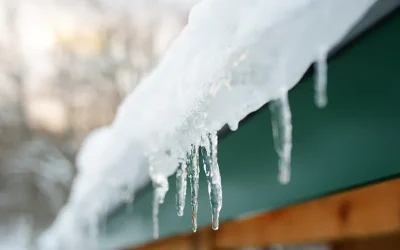

If you live in a region that sees snow, you’re likely familiar with the sight of thick ridges of ice forming along the edge of a roof. While they may look harmless, these ice dams are one of the biggest winter threats to your roof and your home’s interior.
At Stronghouse, we see it every year — leaks, ceiling stains, warped drywall, and even mold. The good news is that most ice dam problems are preventable, especially when gutters and ventilation are working properly. Here’s what every homeowner should know to stay ahead of the damage.
What Is an Ice Dam and How Does It Form?
An ice dam is a buildup of ice near the edge of your roof that prevents melting snow from properly draining. It usually starts when warm air from your home rises into the attic and begins to melt the underside of the snow on your roof. As this melted water flows down the slope, it hits the colder eaves and refreezes, eventually forming a barrier of ice.
As more snow melts, the water backs up behind the dam, often working its way under shingles and into your home. This process can cause leaks, insulation damage, and costly repairs.
How to Prevent Ice Dams Before They Start
1. Keep Snow Off Your Roof
After every snowstorm, remove the snow closest to the roofline. Use a roof rake to clear the first three to four feet, starting at the eaves and working upward. This reduces the amount of snow available to melt and freeze again. If you can’t reach safely, hire a professional who specializes in roof snow removal.
2. Don’t Forget Your Gutters
Clogged gutters are a major contributor to ice dams. When water can’t drain properly, it freezes at the edge and worsens dam formation. Clear your gutters before winter hits and make sure downspouts are open and directed away from your foundation.
3. Insulate and Seal Your Attic
The best long-term solution is stopping heat loss from inside your home. Make sure your attic is well-insulated and seal any gaps where warm air can escape, including around chimneys, light fixtures, attic hatches, and vent fans. A cooler attic means less melting snow and fewer freeze cycles on your roof.
4. Check Your Roof Ventilation
A properly vented roof allows cold air to flow through the attic, keeping the underside of your roof cool enough to prevent melting snow. Ridge vents, soffit vents, and gable vents all help balance temperatures and reduce the risk of ice dams forming in the first place.
How to Remove Ice Dams Safely
1. Create a Channel for Water to Escape
If an ice dam has already formed, one method is to melt a narrow path through it. Fill a nylon stocking with calcium chloride (never rock salt) and lay it vertically across the ice dam. Part of the stocking should hang over the edge of the gutter. As the calcium chloride melts through the ice, it creates a path for trapped water to drain.
2. Hire an Ice Dam Removal Specialist
Chipping away at ice or climbing a snow-covered ladder is dangerous. If the buildup is significant or the dam is already causing leaks, contact a professional snow and ice removal company. Many offer steam-based removal that minimizes damage to your shingles.
What to Do If You Already Have a Leak
If water is entering your home and you can’t remove the dam quickly, try cooling the underside of your roof from inside. One method is to place a box fan in your attic and aim it at the area where water is leaking. This helps refreeze the melting snow and can stop the leak temporarily.
This works best if your attic has some form of ventilation to bring in cold air. It’s not a permanent fix, but it can buy you time until a professional arrives.
A Few Final Tips
Do not use rock salt. It will damage your shingles and gutters.
Do not attempt to chip or pry the ice off your roof. This often causes more harm than good.
Stay on the ground. Always prioritize safety when dealing with snow and ice.
The Bottom Line: Be Proactive, Not Reactive
When it comes to ice dams, an ounce of prevention is worth far more than the cost of repair. Stay on top of snow buildup, keep your gutters clear, and make sure your attic is sealed and ventilated properly. If your roof or gutter system is outdated, talk to your local Stronghouse team about a long-term solution designed for winter climates.
We’re here to help you protect your home from the top down — with roofing, gutters, siding, and insulation solutions that keep water out and peace of mind in.
Get a Free Quote